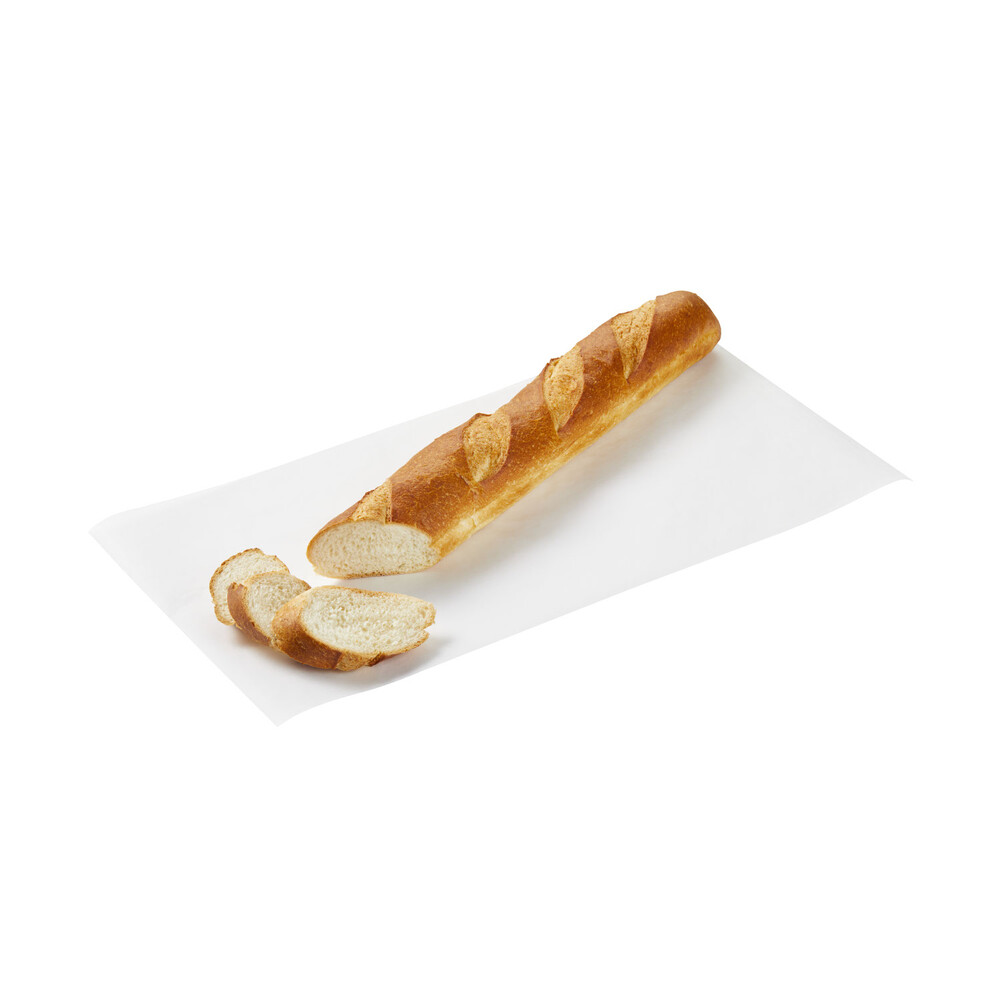
✅ Positives of French Stick 1. Simple Ingredients • Typically made from basic ingredients: flour, water, yeast, salt. This simplicity means no “junk” additives in many cases. • Lower in fat compared to many processed breads / pastries. 2. Low in Fat • For example, Coles French Stick has only ~2.8 g fat per 100 g.  • Saturated fat is also quite low.  3. Good Source of Carbohydrates • Provides a good amount of carbs (~50-60 g per 100 g) for energy.  • Useful as a staple carb in meals (sandwiches, with soup, etc.). 4. Moderate Protein • Contains a decent amount of protein: e.g., Coles French Stick ~8.9 g protein per 100 g.  • Helps contribute to satiety a little more than super-refined snack carbs. 5. Versatility • You can use it in many ways: as a sandwich base, for dipping, for bruschetta, garlic bread, etc. • Because it’s crusty, it toasts very well, making it good for breakfast or snacks. 6. Lower Added Sugar • The sugar content is usually quite low. For white French stick, it’s around 2-3 g per 100 g.  • This makes it less “sweet” and more of a neutral bread option. ⸻ ❗ Negatives / Potential Downsides 1. High in Carbs / High GI • Because it’s mostly refined flour, it’s high in carbohydrates, which can spike blood sugar. • White French bread has a relatively high glycemic index (GI).  • If you’re watching carbs (for weight, diabetes, etc.), it might not be ideal in large amounts. 2. Low in Fibre (if White) • White-flour versions of French stick have relatively low dietary fibre. For example: ~3.3 g fibre per 100 g for some sticks.  • Low fibre means it’s less beneficial for digestive health than wholegrain breads. 3. Sodium Content • Some commercial French sticks have a good amount of sodium. For instance, Brumby’s white French stick has ~527 mg sodium per 100 g.  • Higher sodium can be a concern for blood pressure / heart health if eaten a lot. 4. Calorie Density • While not super high-fat, it’s still calorie-dense due to the carbs. For example, Coles French Stick is ~286 kcal per 100 g.  • Easy to eat a lot without realizing, especially if you’re snacking or making sandwiches. 5. Less Nutrient-Dense Than Some Alternatives • Compared to wholegrain or seeded breads, French stick offers fewer micronutrients, fibre, and healthy fats. • It provides more “empty” carbs (from refined flour) rather than sustained, nutrient-rich energy. 6. Allergen / Gluten • Contains gluten (wheat), so not suitable for those with celiac disease or gluten sensitivity. 7. Short Shelf Life • Crusty breads like French sticks can stale or go hard quickly if not eaten fresh (unless modified, or stored well). • If you buy a large stick and don’t finish it, parts may go dry
Share this page
This review is from a verified purchase
Share Your Experience
Have you used this product? Share your review in the Shping app
Write a Review with Shping App